How to build a successful partnership program with Patrick Burke (Gong)
In this episode of iQ², Nabeel Ahmed welcomes Patrick Burke, the Lead Partner Manager at Gong, to discuss his extensive experience in SaaS and partnerships. Patrick shares his journey from working in construction to managing technology partnerships at Adobe and Gong.
Listen from the best podcast platforms


Patrick Burke, the lead GTM partnerships at Gong, discusses his extensive experience in SaaS and partnerships
He emphasizes the importance of having a strong product, selling the vision, and the need for operational skills and internal support to launch effective partner strategies.
Patrick also shares insights on how the role of partnerships is evolving with the integration of data and AI
[00:00:00] Patrick Burke: I think we were really just good at a, just having a stellar product that people wanted to build into. But then two, selling the vision of Gong and what we could be in the future so that for companies didn't feel left behind necessarily if they didn't build an integration at Gong.
And similar level scale ups, especially at the start, it's probably just gonna be you. Or maybe like a couple other people, but all those people, most likely at the beginning have revenue numbers attached to them, which means they're gonna be wearing an additional hat that is enablement and wearing an additional hat that is operations.
And like naturally you're gonna have to wear those additional hats. It's just the name of the game.
[00:00:42] Nabeel Ahmed: Today's guest is Patrick Burke, leading GTM partnerships at Gong for the past three years and previously driving strategic Cloud technology at Adobe. He's right at the center of how modern go-to-market teams scale through partnerships. Please welcome Patrick Burke.
Alright everyone, we've got another episode of IQ Squared with, I would like to say one of the best drinking buddies I have, but when it comes to partnerships.
But the mis, but Mr. Patrick Burke here, he is a partner, lead partner manager at Gong currently, and that's actually where our friendship stemmed. but that doesn't shape and encompass who he currently is. And there's a massive history around what you've done. I think you've done a little bit, little stint at Adobe too from a partnership perspective.
So before I ruin this, Patrick, why don't I hand it off to you to give everybody. A real introduction on what you've done, who you are, and where you're going. 'cause I think it's gonna be a good and a, fun one where we'll probably have to censor a few things depending on what we talk about.
[00:01:49] Patrick Burke: All right. thank you Nabeel for that wonderful introduction. yeah, thanks for having me. Patrick Bur. Have had about a little under a decade in SaaS and partnerships experience. right now, a little over three and a half years at Gong, managing mainly our technology partnerships as well as some of our strategic services solutions, companies, partners.
so have a little bifurcation there, which is always fun. And then before that, I also worked at Adobe as Nabeel graciously pointed out. I was there for a little under six years and mainly worked with our hyperscalers as well as just general ISVs over there. So the current, the through thread or the through between all of it is really, technology partnerships?
[00:02:41] Nabeel Ahmed: Yeah. it's funny if you scroll all the way down to Patrick Burke's LinkedIn and I recommend everybody to connect with them. If you are listening, the first. Experience I see is, various construction jobs. and I think that's really quite interesting. we could talk about partnerships all day, and I'm sure we will, but how was that?
It was like four years in construction. what can you do actually? Can you actually do, yeah. Not a lot. Rare.
[00:03:12] Patrick Burke: a lot of things vary poorly. in high school and college. I had a, plethora of summer jobs that were various things. the first one, like I was an electrician's apprentice.
I was a painter's apprentice. I was a plumber's apprentice. and then I was a geotech, which is a fancy way of saying I was a soil tester. So I went out with a little machine and I tested the compaction of the earth, on development sites.
[00:03:48] Nabeel Ahmed: So you, you are probably prob one of the, here's what it
[00:03:52] Patrick Burke: taught me about b2b, partnership.
[00:03:55] Nabeel Ahmed: Yeah. Was literally, I was gonna say, is I'm ready for that LinkedIn post on why, how construction helped me with B2B SaaS sales. but I, I wanna ask you the question. The reality is you're probably one of the most really skilled people I've met then, which I didn't know. I just found out about this today.
That you actually can do real world things. Congratulations, Patrick. That's, that's amazing, but I won't ask you the loaded question in the sense of how does this create transferable skills? I think what's interesting is why did you even get into technology in the first place?
[00:04:31] Patrick Burke: Yeah, that is a good question.
I went to school in the Bay Area and I was transferred essentially from across the country. I grew up in Washington, DC outside of Washington, DC, Maryland area. And I went across the country to Santa Clara University in the Bay Area in Silicon Valley, and I graduated there with a political science degree.
And I very quickly realized after mu many conversations with lawyers that I did not want to be a lawyer. So I was like, okay, what else is out there really, especially being in, in the Bay Area. So I actually ended up doing A-A-B-D-R role from one of my friends. who had interned at this company gave me an introduction.
It's on my LinkedIn, you'll see it, it's called Logical. And that's how I broke in. And then from there I got recruited to, to Adobe. But at Logical, I like to just point out. it, funny enough, I got in because of my PoliSci degree because it was cold call calling litigators, which as you can imagine are like the probably top three type of people.
You don't wanna be cold calling.
[00:05:36] Nabeel Ahmed: Yeah.
[00:05:37] Patrick Burke: so it was very fun and like a nice way to. I cut my teeth, into sales. Yeah. Was
[00:05:43] Nabeel Ahmed: it, was that the worst experience of your life or was it actually quite fun because you didn't know any better?
[00:05:50] Patrick Burke: it was actually pretty fun.
'cause again, it was like, okay, my first roll out of college, zero BDR experience, at the beginning there was just, there was four of us all together as BDRs. I was the second one hired. The other guy who was hired before me was a lawyer for eight years. So Not very well tenured as A BDR, but tenured as a professional and particularly could actually talk legal stuff.
And then two other guys came right outta USC, not at all familiar with the, legal world. So it was a really fun kind of group, in the four of us that we, that we had.
[00:06:28] Nabeel Ahmed: yeah, and it's funny, I never knew it wasn't terrible. I never knew you were A BDR until right now too. So that's, that's wild to think.
But then you went and jumped straight into Adobe and got into partnerships, which I imagine in a large enterprise company that's, either a wild time, a fun time, or is this just everybody under, in the world is trying to knock on your door.
[00:06:53] Patrick Burke: Yeah. went from logical to Adobe. Started out in the Adobe, sales Academy, which is a fun.
Fun, program that they have over there. That's fantastic. Highly recommend it. Within the Adobe Sales Academy, moved on to partnerships and it was really interesting actually, especially being there for the length that I was and moving around into really two or three different groups or two groups that had changed over time.
It was super cool because at the beginning it was really, we focused on one partner and one partner only. That was how we leveraged Microsoft to drive two of our products, one leveraging their Azure relationship. And then it was right when Mac agreements were becoming a thing. and then the other was around driving Adobe campaign usage.
and adoption through Dynamics One was a lot more successful than the other. You can probably imagine which one was. and so we doubled down more and more on the MAC agreement side of things and the Azure agreement side of things, and really leveraging that side of the partnership.
This hyperscaler motion to drive a net new a RR as well as even new renewal dollars, tough renewals, those sorts of things for Adobe. And there are a lot of like really cool mechanisms that, like I learned early on in my career to get some of those deals done that I probably wouldn't have if I didn't.
Yeah, I can't, put into words how valuable that experiences was, but even just that was my first job there, or that was my second or third job there. After that I went to and went into ISVs and owned like four different partnerships, which was a totally different game, but still super fun.
It was almost like the inverse wherein I was trying to get our reps to help co-sell like a Yext deal to their customers. Whereas like I was really used to actually like selling Adobe to Microsoft, or at least the dollar value that they could receive from partnering with us, based on the consumption.
That was cool. And then I rounded out that by going back to the Hyperscaler team and working on not just Microsoft but AWS as well, because we had so much success with, Azure that hey, why not open it up to the other guys too?
[00:09:06] Nabeel Ahmed: Yeah. So massive enterprise experience from a partnership angle, not only working at an enterprise company, but partnering with other enterprise companies.
And then your ISV, partners, I assume are a few hundred million anyways, in, in. In, revenue or were they even based on
[00:09:25] Patrick Burke: that? Yeah, no, some of them were public companies, so definitely a different kind of level or different atmospheres maybe than what I'm like working in right now.
[00:09:36] Nabeel Ahmed: Yeah. and so why were you a psycho enough to jump to a startup? and when I, and there's a reason why I say psycho is I don't think there was an actual partnership structure or organization. Was mature at Gong, I think you were probably one of the first partner hires. is that a correct assumption?
[00:09:58] Patrick Burke: there were starts and stops before I came here, and there were people that are like foundational to the partnerships mechanism, that were here before me when I came. We had two, we had three leaders, one strictly in technology, and then the other two more around like our go to market and then.
They hired myself and then my colleague Anna before me, and then they hired before Anna, a partner engineer. So there was like, you could call it five, but really it was like three individual contributors. going around trying to figure out what the hell is partnerships in what was like sales technology.
What now we're calling revenue technology, revenue, ai. It's been a, it's been a journey for sure. Yeah,
[00:10:46] Nabeel Ahmed: and it's wild because that's actually where I met Patrick was through the Gong Lead IQ relationship. And before I was doing any of this role, I was just like a scrappy person running deals.
And I think that was probably the first meeting I ever had was somebody was escalating a deal and was like, brought Patrick Burke on. And by the way, if you ever look at Patrick Burke's LinkedIn photo or his Slack photo, you're like, this guy is so mature. He's so well buttoned. I was like, dude, I'm gonna be talking to this guy.
I don't even know who he is. And then we kicked it off around that meeting, and then we eventually just got stuck working with each other. But the interesting thing is like you got assigned to ISVs through this motion, right? Like a lot of the technology partners. Yeah. With Gong. How'd you see that grow?
Like where did it start from? Like, how many partners did you have? Or was it just some interests? And then where did it kind of skyrocket to what it is today?
[00:11:42] Patrick Burke: Yeah, I mean I think you saw a lot of it probably by being in the ecosystem though, right? And a lot of it has, like I take no credit for most of it.
we had a fantastic integration team. there was a gentleman named Ahi Aber and now Bridgette Finnegan and of course Ron Maloney who, really had managed that over the last few years, driving this ecosystem. and really selling the value of building into Gong. and almost like looking at outside, like we are not a CRM, but we did leverage like a hub and spoke model to, incentivize partners to build into Gong.
And so I think we were really, just good at a, just having a stellar product that people wanted to build into. But then two, selling the vision of Gong and what we could be in the future so that people didn't feel. Our companies didn't feel left behind necessarily if they didn't build an integration.
so I think that's why you've seen it really proliferate ACO across, the last couple years, especially when you like compound that with the fact that we've now launched multiple products and the two products that we have launched are like. Very much mainstay products or have main, like the competitors are very much mainstay solutions in a salesperson's tech stack or a go to market person's tech stack now that we're talking about this holistically, being of course like a sales engagement platform, and then a forecasting solution, right?
And especially with the sales engagement, there's so many touch points that a company can build into there, whether it's really just account panels. For, buttons. If you're like, a gifting platform to be able to send directly from our SEP platform, that's like just one side of the things, right?
And like my head naturally gravitates towards that. But then there's all of this like other side of signal based intent that can now be pushed into these type of. Or like the platform that we have to, yeah, just get so much more value out of it and that again, it's just so many more touch points when you add additional platforms.
And of course now we're coming out with Orchestrate as well. Like it's just so many more opportunities for partners to be building into us.
[00:14:05] Nabeel Ahmed: you guys are shipping fast and we love seeing that. I think, for anybody who's Neo or doesn't know, I think Gong's probably one of our most premier partners, right?
Like you guys are the gold standard on what actually triggered our whole partner ecosystem. Build. Like we focus a lot of this on what you guys did with Gong and a lot of great co-sell and resell that kind of comes out of this. My next question that kind of flows into it, so like you've got.
Massive enterprise experience. You've gone from a small partner team to now a rapidly expanding partner team with a rapidly expanding product such as Gong almost, taken over the revenue AI world or even the sales tech world. If I, look at it, if I was listening and I'm a partner person and I'm new to a smaller company that's growing, what would be your first.
Level advice for them to build a partner program.
[00:15:05] Patrick Burke: Ooh. if they're brand new and they're like the only person there.
[00:15:08] Nabeel Ahmed: Correct. Scrappy, like CEO's, I think we need to do a partner strategy. I don't know what it is. I'm hiring you.
[00:15:15] Patrick Burke: Yeah. it's, it's funny, so I'll preface with this.
When I joined Gong from Adobe, there was a huge learning curve just based on the fact that okay, when you're at Adobe. It's a big company obviously, right? you have resources and you can get resources pretty easily and not just monetary resources, but like people resources, like there's people not at your beck and call, but you have dedicated operations people, dedicated success people, like there is a partner, people ecosystem at the company that you can leverage.
at Gong and similar level scale ups, especially at the start, it's probably just gonna be you or maybe like a couple other people, but all those people, most likely at the beginning have revenue numbers attached to them, which means that they're not gonna be doing, or like they're gonna be wearing an additional hat that is enablement and wearing an additional hat that is operations.
And naturally you're gonna have to wear those additional hats. That's just the name of the game. People sometimes say that being a partnership person is like the closest to running your own business. They say that about every single role. I'm not gonna say that, but I am gonna say that you do get a lot of particularly opera, like if you're good, you should be getting a lot of like foundational operation skills and enablement skills, but really operation skills.
One, get those skills, but then two, make relationships with people in enablement and people in operations. Particularly like leadership. Obviously you're, you need those in sales, of course, in cs, but like particularly in operations and enablement because they're the people that are actually gonna help you get things done.
And if you don't have a go-to person in either of those, then you're just yeah, not you are on an island. Partnerships is very much even it's cheeky to say because obviously partnerships is a team sport, but internally it really is.
[00:17:16] Nabeel Ahmed: I, I love the word cheeky.
and so I'm triggered at this point, but, but you're a hundred percent like I built my business and Patrick, I think you're allowed to say, running partnerships is like running your own business because it is wild. I think you're, you hit it spot on. Marketing is probably your easiest entrance right now when in initiating partnerships.
So you almost have to be a marketer. When you look at your internal customers from an operation standpoint, it has to make sense. does it move pretty smoothly? even influence within product, right? hey, how does this partner help? And can we do a product integration to make 'em closer and. Will that provide, ultimately the end all, be all value to the customer and then increase potential value to the, to your business by an increase in revenue.
So I think it's really interesting. I think that, you should probably write a book around that or a little bit of a playbook so that people can capture, partnerships 1 0 1 from enterprise to, growing startup, what you should do. Because I think, it's a growing topic.
and it's actually a great segue into the next question is like. When you look at what's happening in the market, do you think a lot more smaller companies are thinking about partnerships in a different lens than what it has historically been thought of?
[00:18:39] Patrick Burke: Yes, I do. I think you can see that in that I feel like partnerships prior to even like the last three years was thought of as like a.
Nice. one nice to have. It still is at a lot of places, but on top of that, like the first, maybe they would have one partner hire in the first, like a hundred or 200 people. And then it would be like, it, I don't know, essentially just like a handshake level person. Just there to shake hands and kiss babies.
And I think now you're seeing that people, especially AI native companies are hiring their first. Head of partnerships, director of partnerships, whatever you wanna call it, much earlier on in the company lifecycle, like probably really at that more like seed or series A stage, which is great to see because I think that's like one, they're trying to operationalize partnerships into.
If their go to market and product very early on, but also I think it's more because I think it's up for debate whether it's it's harder than ever to make a sale. I don't know if it's necessarily harder to never make the harder than ever to make a sale, but there's so much information coming at a buyer that they're probably very much already informed on what you're selling before you guys have even talked even the first time.
And it probably come to more or less of a decision. Prior to that, especially in more B2B or B2C of course, but transactional B2B sales. so I think people are starting to realize by getting more of the information that's being pushed at the customer, at the prospect, or by helping to inform whatever that information is through indirect channels outside of just, spamming them with emails or cold calling them or texting them or LinkedIn messaging them, but having other people.
Informing them with what you want to them to be informed with either through partnership channels, by them directly messaging them, having that relationship with 'em, with our, or with them already joint marketing. So it's either coming from a third party, second party, however you want to think about it.
but yeah, that's that's at least what I've seen. And I gave some reasons as to why, but for sure it's definitely something that's happening. And I think it's, it's, good right?
[00:20:59] Nabeel Ahmed: what's interesting is, there's a lot of, slack groups that I think a lot of people are a part of where they're asking around partnership help and they're like, Hey, I'm thinking about this, thinking about that.
And when you talk to a lot of founders, that are close by, especially in the valley. They're now thinking about partnerships a little bit differently when Should you tell a founder to not think about doing partnerships? Because I think there is, the opposite is now turning true where it's a little bit of a buzzword, build an ecosystem and have a force multiplier on your revenue.
But when should you tell a founder to be like, that's probably not a good idea.
[00:21:38] Patrick Burke: I think they're not, there needs to be like a frame, a framework for success prior to Having that partnerships person or if you don't have additional capacity on your enablement team or your operations team or your marketing team to support partnerships and you're just hiring a partnerships like again head of partnerships or director of partnerships and you're not like intentionally making space for them to partner with other people across orgs within a company, then don't like, there's no reason in hiring that person because like they're gonna burn out very quickly.
You're wasting whatever you're paying them on salary that can go to someone, probably in that perspective, just spend it on a BDR or like an inside sales person because you're making, you're, looking at that person to just start drumming up business for you when in reality, like there's a lot more things you probably have to lay down at the foundational stage to them even be remotely successful.
[00:22:31] Nabeel Ahmed: So basically you walk into a room, founders interviewing you and being like, I love you Patrick Burke, like we need. You to run our partnership org. And then you ask them the question around budget, time, support, thought process metrics that they thought of, and they can't answer any of those questions.
It's a pretty, probably a really big red flag.
[00:22:54] Patrick Burke: Yeah, totally. And it's okay, who else has bought in on this? You're the CEO, but are the other is, are other members of the C-suite bought in on this? Do you have Is this the type of company where there's a single point of failures in marketing ops and sales ops and other things like that where they might be heads of, but they're very powerful.
are they aligned to this? like every company is different and there's certainly things that you wanna look out for whenever making that, initial partner hire or if you're a partner person, going to those orgs.
[00:23:27] Nabeel Ahmed: Yep. I think let's wind it down to the next loaded question.
Probably the last loaded question here. where do you think the partner world is actually going? I think, partner world is quite interesting and you're probably one of the only partner people I know that actually has a tremendous amount of experience like you are. An expert when it comes to the experience you've done into the partnership organization or partner world, but a lot of folks have touched marketing or have been marketers by trade or sellers.
And then how are now getting into the partner title or even the partner job like role, where do you see it all transforming in the next, year to five years with everything that's moving? Especially with ai.
[00:24:18] Patrick Burke: It's a good question. I think that both ICS and managers or leadership in partnerships just has to be like, there's already so much data out there, right?
For a B2B company to leverage when making territories, when creating a cadence, when trying to make a sale right from a BDR to an a. Like there's just so many data points that like I can leverage, I think. From a partnership's perspective, there's a ton of data parsing out which parts of that data is actually valuable in terms of building out value that can go not just to a partner like, but really directly to a salesperson.
I think that's tough and maybe that's like a, I don't know, value attribution type thing or like it, what I'm trying to say is essentially that there's so many data points that I think are, fed from a partnership's perspective. If there's a way to distill that or like the person that can distill that level of data into something value, and of course operationalize it with a sales team, that to me, is a very valuable person, and to me that equates to almost like a go to market partner engineer or go to market.
I don't like, I don't want to use that term go to market engineer, but like the data skills. Or like the skills that some of the data or the go to market engineers have that are like a combination or more in that like sales ops space. I think the more types of those skills, those hard skills that a partnership person can have, will behoove them in the future.
because that's, where I see it going. And of course, again, it's great if you can manipulate data, but understanding what data points are actually gonna move the needle for you. And uncovering kind of unique ones. That's the gold.
[00:26:15] Nabeel Ahmed: I love it. No, I think it makes sense. It's, what you're saying is the partner role is actually a lot more layered than it used to be, right?
you're gonna have to be able to shake hands, kiss babies, you're gonna have to actually run sales processes. You're actually gonna have to understand technical product integrations. very indepthly. At the, 30,000 foot level very quickly so that you can understand and spark different types of conversations.
And you also have to be a master of manipulating data or analyzing data in the right view so that you can understand what potential outcomes could be while also selling that vision internally and externally. So what does that mean You, you probably are the founder. Mentality or skillset when it comes to building any type of partner motion in any type of company, whether big or small.
I love it. Yeah, that's my, I like that. That's my Ted talk. I think, we're, done there, but no, at the end of the day, Patrick, I appreciate we went way over time. I, appreciate you making the time, talking about who you are, what you've done, and where you're going. for anybody that's out there listening.
And wants to connect and gain a little bit of your expertise, are, you willing to open up that LinkedIn so I can paste it everywhere and, maybe we'll extra data out there for Patrick. So give him a text and said, Hey, Nabil told me to text you.
[00:27:51] Patrick Burke: There you go. Sounds, sounds great.
Looking forward to the text.
[00:27:54] Speaker 3: Cool. hey, I appreciate it Patrick. I hope to see you soon. If not, have a. An amazing end of the year, and I'm sure we'll, chat with each other
[00:28:05] Patrick Burke: that we will. Thank you, Nabil.
Meet the Guests
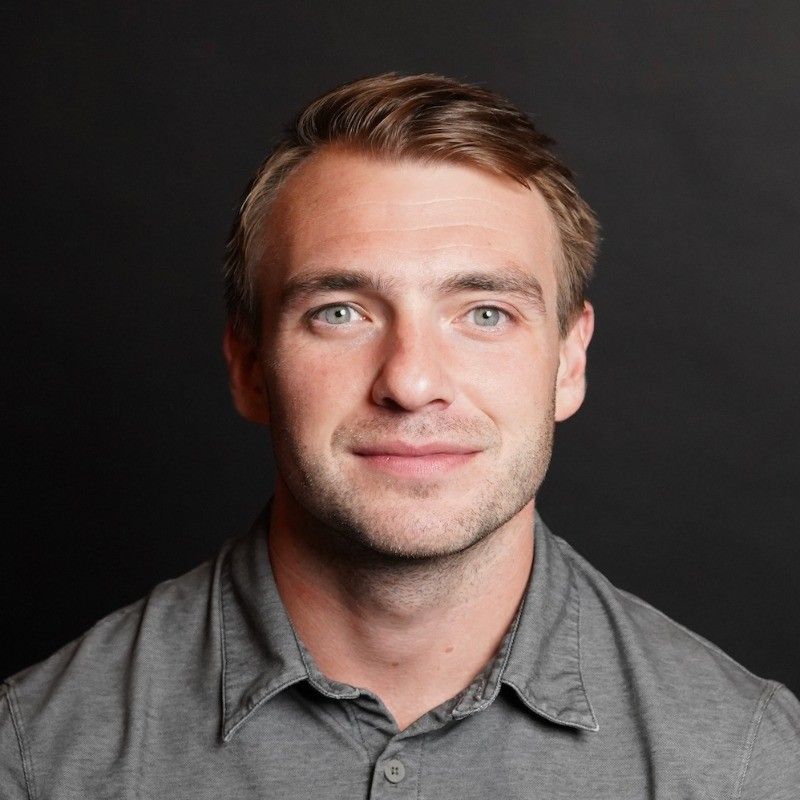

Over the past three years, Patrick has been instrumental in driving GTM partnerships at Gong, leveraging his extensive experience in technology partnerships from his previous role at Adobe.