Did you know the average enterprise sales team uses 23 different GTM tools?! Here are some of the top ones teams are using today.
PUBLISHED:
December 11, 2025
Last updated:
Nabeel Ahmed
Vice President of Growth & Partnerships
Key Takeaways
Companies understand how important GTM motions are for sales success in today’s market and they’re investing in software to support their GTM teams.
But just because a shiny new GTM tool made it to market doesn’t mean it must be added to your stack.
By investing in purpose-built GTM tools that play nicely with each other, teams can consolidate their stacks, streamline workflows and data, and avoid paying for software they aren’t using.
But as tech stacks continue to sprawl, more orgs are stepping back and consolidating their tools, rediscovering that the age-old wisdom less is more still holds true in the process.
When your team has too many tools, many are underused (if they’re used at all!) and reps get bogged down by constant context switching, which crushes productivity.
“Tool sprawl sneaks up on you fast, and before you know it, you’re paying enterprise prices for 15 things that all overlap,” one Reddit user recently wrote. “Cutting down to a tight stack is honestly the biggest unlock most GTM teams never do. Five well-configured tools will beat twenty half-used ones every time.”
To help you design a go-to-market (GTM) stack that helps your team win more business, we’ve put together a guide that examines different types of GTM tools on the market today and how to properly evaluate them.
Keep reading to get a better understanding of tools that can really uplevel your team — and which capabilities might not move the needle as much.
This is the tech stack that we're currently seeing elevate multiple go to market motions across multiple companies. Most sales teams use twenty plus go to market tools and still misquote them. Too many tools means messy data, broken workflows, and reps stuck doing manual work. So which go to market tools actually matter going into this year? Starting with Chili Piper, route leads and book meetings faster. Gong, turn sales calls into real revenue insights. Outreach, automate email slash call follow ups without losing personalization. Clay, the ultimate automation environment connecting a bunch of tools together. And LeadIQ, find, enrich, track the right buyers and accounts instantly. These tools help teams move faster without adding any complexity. If you're thinking or rethinking your go to market stack this year, the full breakdown is in the blog. Read the full list of top go to market tools on LeadIQ. Link in the post.
GTM tool comparison table
Tool
Use Case
Pricing
LeadIQ
Keeping CRM records up to date with comprehensive contact data and AI-driven data enrichment.
Free tier; Pro plan starts at $15/user/month with 2,400 credits (30-day free trial); Enterprise plans available.
Chili Piper
Streamlining lead qualification, routing, and meeting scheduling to accelerate demand conversion.
Full platform starts at $72/user/month, plus $1,000/month platform fee; can mix and match modules depending on needs.
Gong
Accelerating revenue operations (RevOps) with AI-driven conversation intelligence, sales forecasting, and more.
Pricing information is not publicly available; packages include per-user pricing and a platform fee based on the number of users.
Outreach
Streamlining revenue workflows across the GTM function to help sales close more deals.
Pricing information is not publicly available; Outreach offers several different plans, per-user pricing, and no platform fees.
Clay
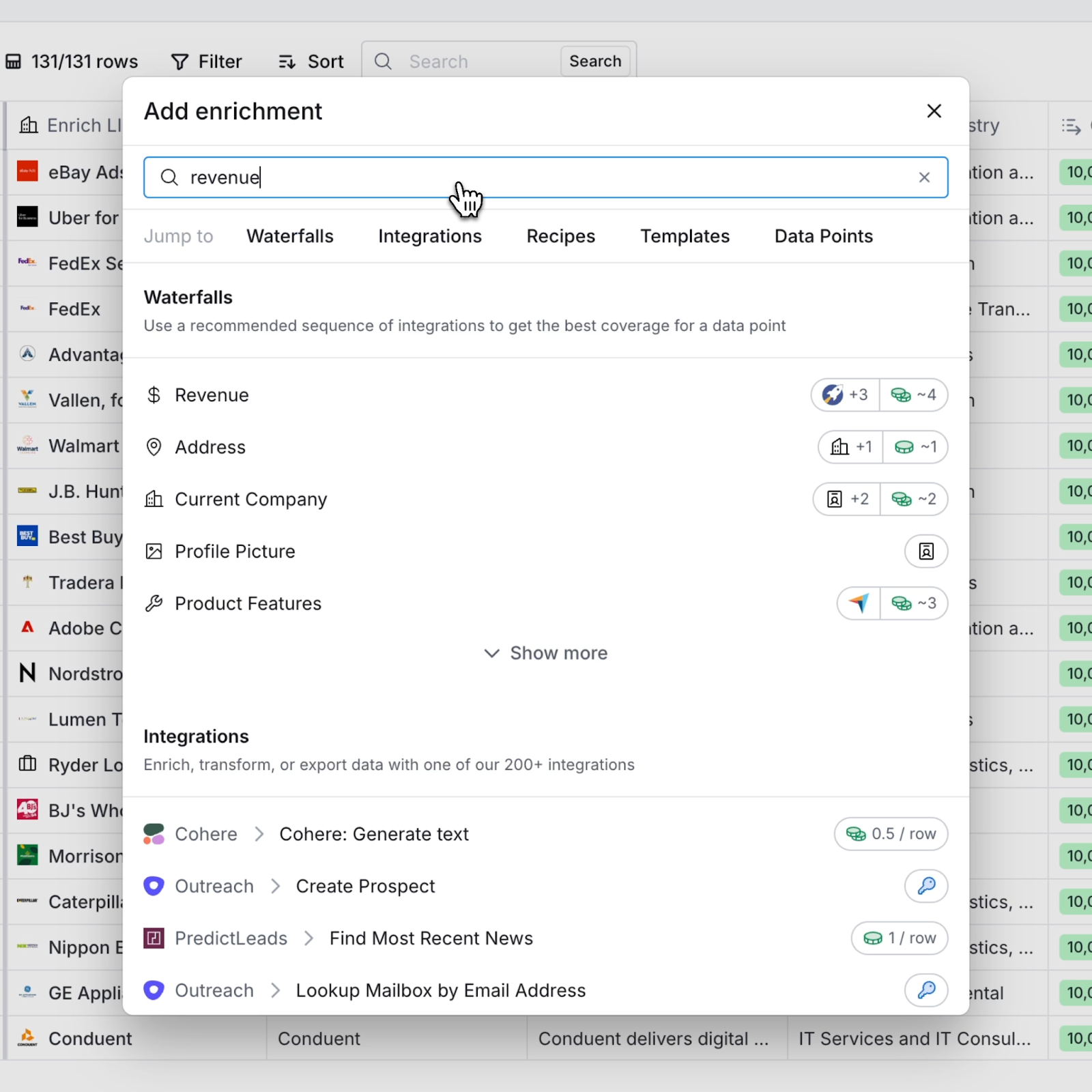
Consolidating and enriching B2B contact data from more than 130 different data sources.
Free tier; Starter plan starts at $134/month at 24,000 credits per user; Clay also offers Explorer, Pro, and Enterprise plans at higher price points.
Salesforce Pardot
Powering B2B marketing operations with AI, automation, and Salesforce data.
Offers a starter tier for $25/user/month; Marketing Cloud Growth starts at $1,500/org/month and Marketing Cloud Advanced at $3,250/org/month.
Userpilot
Optimizing customer onboarding to increase activations and user engagement.
Free trial; starts at $299/month for small teams; Growth and Enterprise pricing data not publicly available.
PartnerStack
Managing and scaling GTM partnerships to drive more revenue and win more customers.
Pricing information isn’t publicly available.
Groove by Clari
Streamlining sales engagement workflows by centralizing all sales data and powering consistent outreach through proven playbooks.
Pricing information isn’t publicly available; no options for custom packages (i.e., you have to buy the full platform).
Grow by Epicor
Improving GTM business intelligence to learn more about what’s working and iterate on what isn’t.
Free trial; pricing information isn’t publicly available.
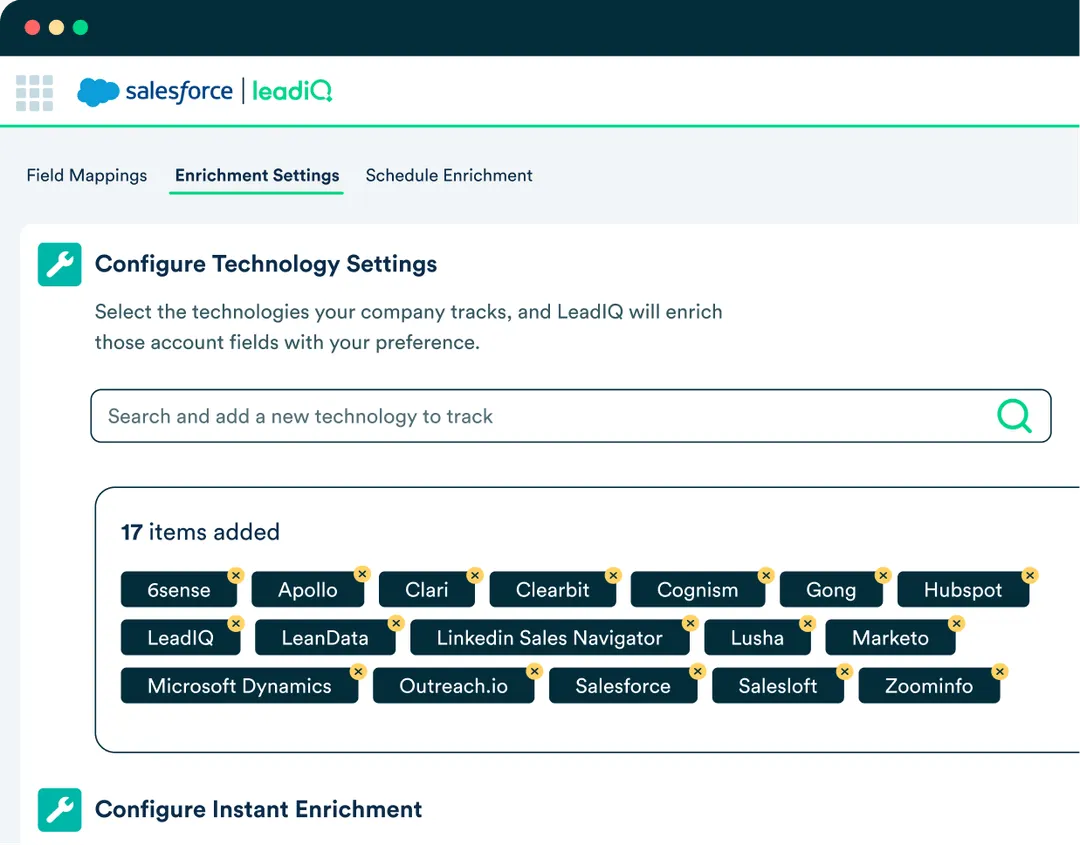
LeadIQ is a full-featured sales intelligence platform that helps reps sell more effectively with automatic lead capture, CRM sync, and AI-driven data enrichment tools that ensure contact data stays up to date and always actionable. Its AI-powered prospecting features help sales, customer success, and marketing teams identify ideal accounts and the right stakeholders faster — and personalize outreach in just a few clicks using Scribe, a genAI writing partner.
With automatic signal tracking, a comprehensive contact database, and smooth integrations with tools already in your sales tech stack, LeadIQ streamlines every stage of prospecting so teams can build pipeline faster and drive more conversions.
LeadIQ features:
Identify prospects that match your ideal customer profile (ICP) and capture contact data to your sales tools in one click.
Get notified when champions and decision-makers switch jobs automatically and strike when the iron’s hot.
Keep contact data up to date with automatic AI-driven data enrichment.
Integrate LeadIQ with other tools in your stack, including Salesforce, HubSpot, LinkedIn, Gong, Outreach, and Salesloft, to maintain a single source of truth without having to manually copy and paste data.
LeadIQ pros:
Comprehensive B2B contact database, including EMEA data, with unparalleled data accuracy.
Award-winning platform, most recently racking up a slew of accolades in G2’s Fall 2025 reports, including Leader in Sales Intelligence, Lead Intelligence, Lead Capture, and Lead Mining, Most Implementable and Highest User Adoption (Mid-Market), and High Performer in AI Writing Assistant.
Robust product roadmap filled with AI-driven features coming down the pipeline, helping you future-proof your stack.
LeadIQ cons:
May be too complex and feature-rich for startups and super-small sales teams (try our free Chrome extension to see whether LeadIQ is right for you!)
“LeadIQ makes it much easier and faster to find new customers. It’s great how easy it is to get verified contact information from LinkedIn and send it to Salesforce and Outreach in just a few clicks. It saves me a lot of time every day.” —Faizal P., business development rep, Oct. 2025
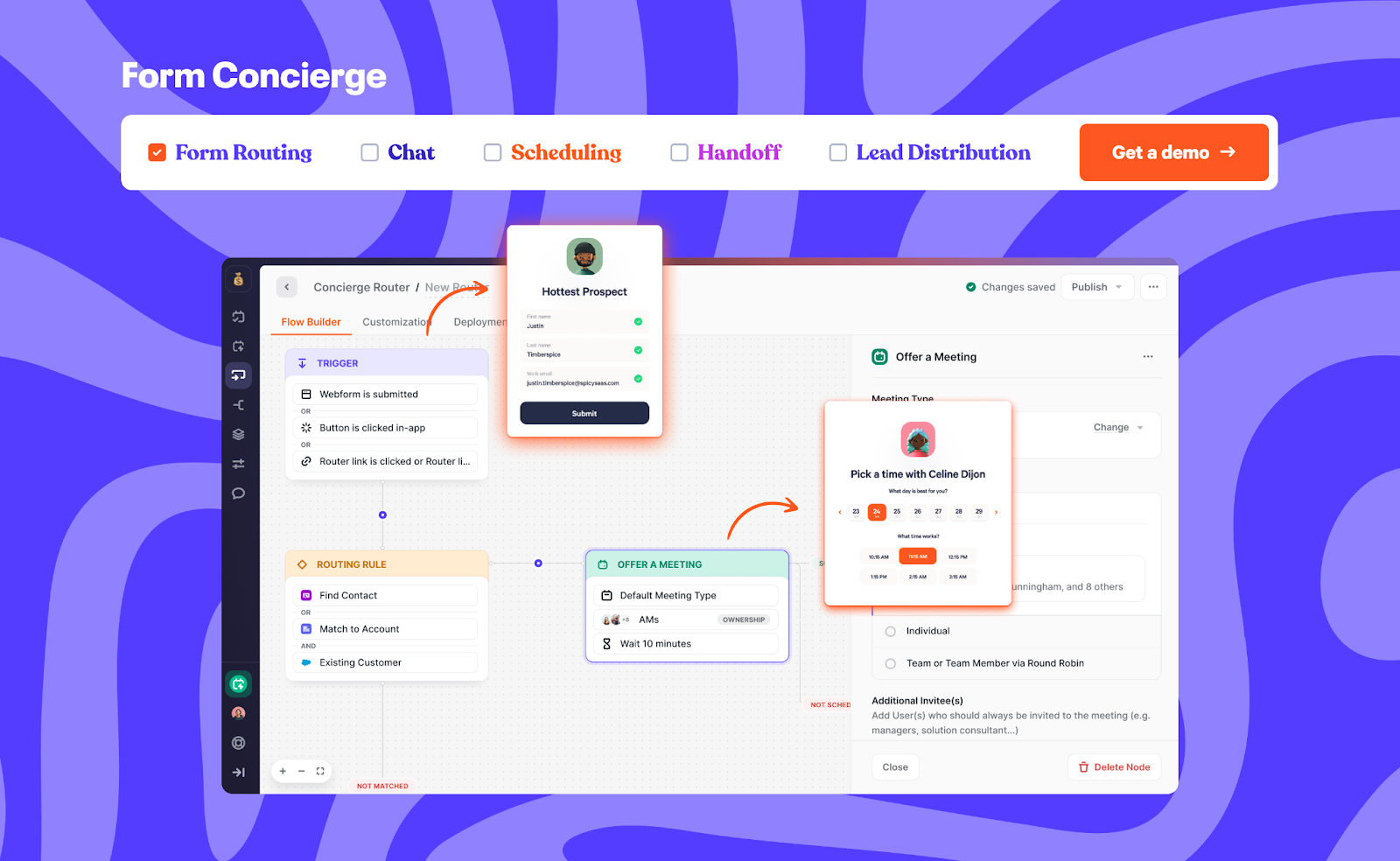
Chili Piper is a demand conversion platform that brings form routing, lead distribution, AI-powered chat, and scheduling together to help GTM teams transform demand into pipeline. With the ability to automatically qualify leads directly from web forms, algorithmically-driven handoff capabilities that ensure leads are distributed equally, and one-click scheduling for easier meeting booking, Chili Piper helps sales teams minimize manual work and spend more time selling.
Chili Piper features:
Lead enrichment tools that automatically fill prospect data using contact info from top data providers, including LeadIQ, enabling teams to keep forms short and boost form fills.
Real-time lead qualification that ensures warm leads are engaged when they’re most receptive to hearing your pitch.
Chat AI, an always-on virtual sales rep that can respond to prospect questions in real time, qualify leads, and book meetings around the clock, ensuring no leads slip through the cracks, even when your team is sleeping.
Chili Piper pros:
Feature-rich platform that consolidates several critical sales tools into a single interface, increasing sales efficiency and reducing context switching.
AI agent that detects junk emails and spam, making sure reps’ calendars don’t fill up with bogus meetings.
One-click meeting booking capabilities that make it easy for prospects to schedule a time to meet, reducing friction and making it easier to hit quota.
Chili Piper cons:
Some users report that Chili Piper can be a bit cumbersome to set up; once configured, however, it runs smoothly.
Others report that there could be a bit of a learning curve for new users.
Gong is an AI-powered revenue intelligence platform GTM teams use to engage prospects more effectively, understand them on a deeper level, and ultimately drive more predictable revenue growth. Using AI agents, Gong streamlines rep workflows with sales automation while rapidly surfacing actionable insights that makes it easier to win more business.
Gong features:
Automatically capture every sales conversation, with AI recommendations about the most impactful next step you can take to increase deal velocity.
Boost reply rates with truly personalized emails that draw from sales conversations, with Gong users reporting a 34% uptick in response rates.
Improve forecast accuracy by using more customer data to better predict the future and manage your pipeline more effectively.
Leverage a library of purpose-built AI agents to track revenue signals, identify themes, generate structured briefs, and more — all of which helps you accelerate the revenue cycle.
Gong pros:
Delivers a slew of AI features designed to streamline prospecting workflows and make life easier for GTM teams across each stage of the buyer’s journey.
Provides deep visibility into all sales conversations and interactions, making it easy to identify trends and use data to improve sales strategies.
Eliminates the need for note-taking during meetings, helping reps zero in on what’s most important during any sales conversation.
Gong cons:
Pricing data is not publicly available, which means you’ll have to chat with the sales team to see if Gong fits in your budget.
Some users express concerns about the accuracy of Gong’s AI transcription capabilities (though others say the transcriptions are high quality).
Outreach is an AI-driven revenue workflow platform that helps GTM teams streamline prospecting and engage leads at the most opportune times. With forecasting, deal management, and coaching tools, Outreach also helps teams execute successful land and expand strategies by flagging churn risks, automating retention, and suggesting ideal candidates for upselling.
Outreach features:
Use AI-powered sales engagement tools to follow-up with leads automatically at the best times.
Keep tabs on every deal as they move through the opportunity lifecycle to focus on closing prospects most likely to convert.
Quickly identify the best opportunities and at-risk deals, using actionable AI recommendations to prioritize efforts accordingly.
Improve sales forecasting with automated roll-ups and built-in scenario modeling.
Outreach pros:
Brings tons of tools revenue teams need — forecasting, deal management, engagement, conversation intelligence, coaching, and more — all under one roof.
Intuitive design makes the platform easy to use, helping teams get up and running on Outreach in short order.
Automation enables reps to reclaim time previously spent on manual tasks and spend more time selling.
Outreach cons:
No public pricing data available; you’ll have to engage sales to determine whether you can afford it.
Despite users largely agreeing that Outreach is easy to use, some say that, due to the platform’s feature-rich nature, there’s a learning curve for new team members.
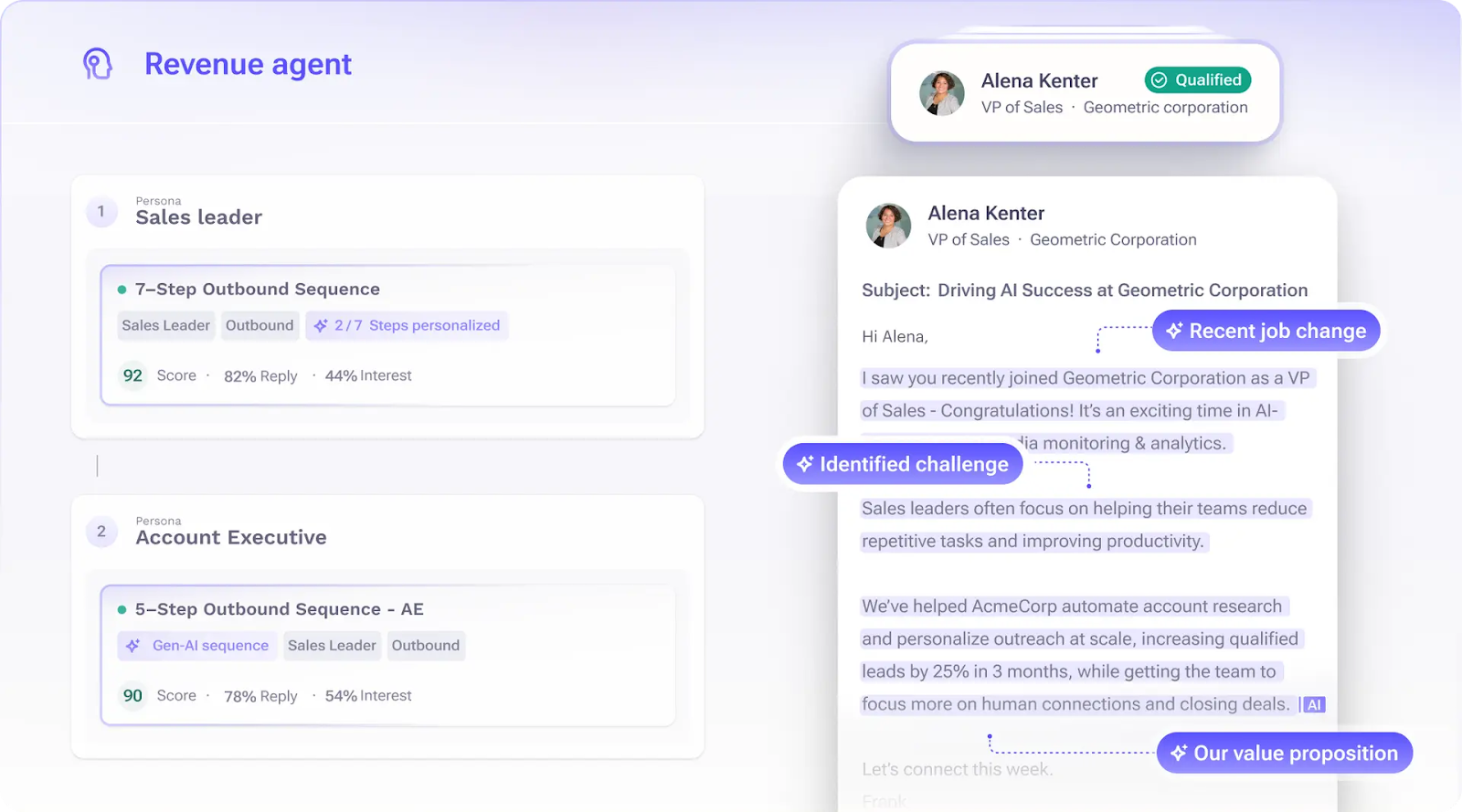
Clay is an AI-driven B2B contact data aggregator and enrichment platform that gives GTM teams the data they need to go to market more effectively and close more deals. A LeadIQ partner, Clay integrates with over 130 different data sources, giving sales orgs a thorough picture of their target accounts and the people within them. With AI-driven research tools and automatic signal tracking, Clay helps teams discover ideal prospects and prioritize the right accounts at the right time.
Clay features:
Accelerate research workflows with Claygent, an AI-powered research assistant that helps you quickly identify accounts that match your ICP.
Automate enrichment workflows, including first-party data, intent data, contact data, and more, plus data normalization.
Personalize outreach automatically using an AI writer that helps you ensure each message resonates.
Clay pros:
Keep CRM data clean and enriched, always, to ensure your GTM team always acts on current data.
Consolidate prospecting, research, and messaging in one interface to reduce app switching and stay focused.
Track custom signals automatically, including when high-value accounts visit high-intent pages on your website, to boost conversions.
Clay cons:
Can be expensive for budget-conscious teams, though Clay does offer a free tier.
Due to Clay’s feature-rich nature, some users report that it takes time to figure out how to use the platform productively.
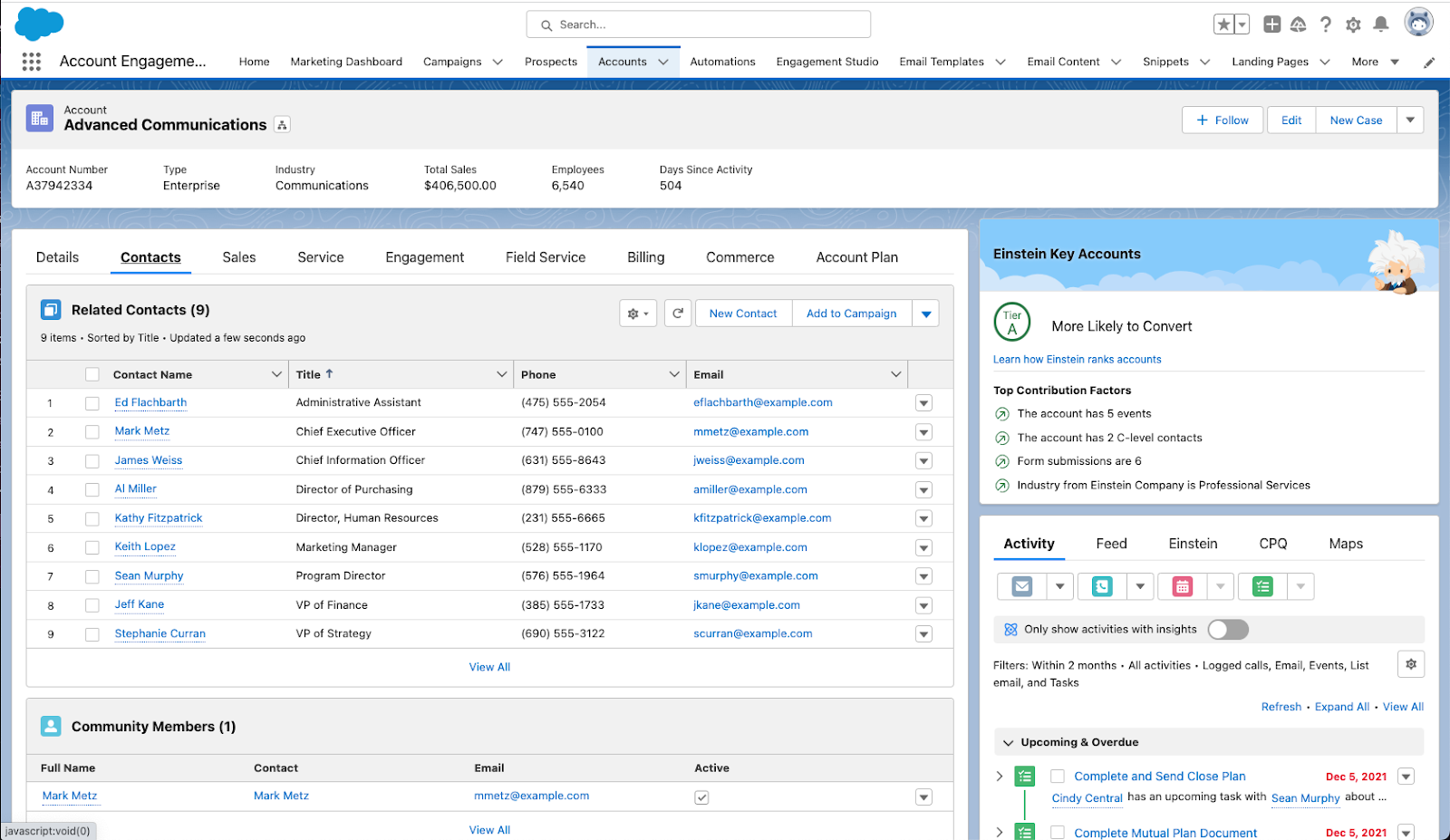
Salesforce Pardot, now known as Salesforce Marketing Cloud Account Engagement, is a marketing automation platform built on the Salesforce CRM, making it useful for keeping GTM teams aligned and working off the same customer and prospect data. Using Salesforce’s marketing automation tools, GTM teams can accelerate lead generation, improve lead nurturing, and keep buyer journeys consistent across accounts and channels.
Pardot features:
Supercharge lead generation with tools that help you identify key buyers, keep revenue teams aligned, and use AI agents to engage prospects.
Personalize each interaction with real-time customer data, letting AI agents take care of the heavy lifting.
Analyze customer data rapidly to identify trends and insights about team performance.
Pardot pros:
Seamless integration with Salesforce CRM, making it easy for GTM teams to stay aligned.
Leverage a library of 170 pre-built API connectors to ingest and harmonize your marketing data in just a few clicks.
Use natural language prompts to create marketing campaigns, including landing pages and email copy, while maintaining complete control over brand messaging and tone.
Pardot cons:
Requires teams to use Salesforce as their CRM; if yours doesn’t, this tool won’t be helpful.
Can be expensive for smaller and budget-conscious teams.
Some reviewers report a steep learning curve for new users.
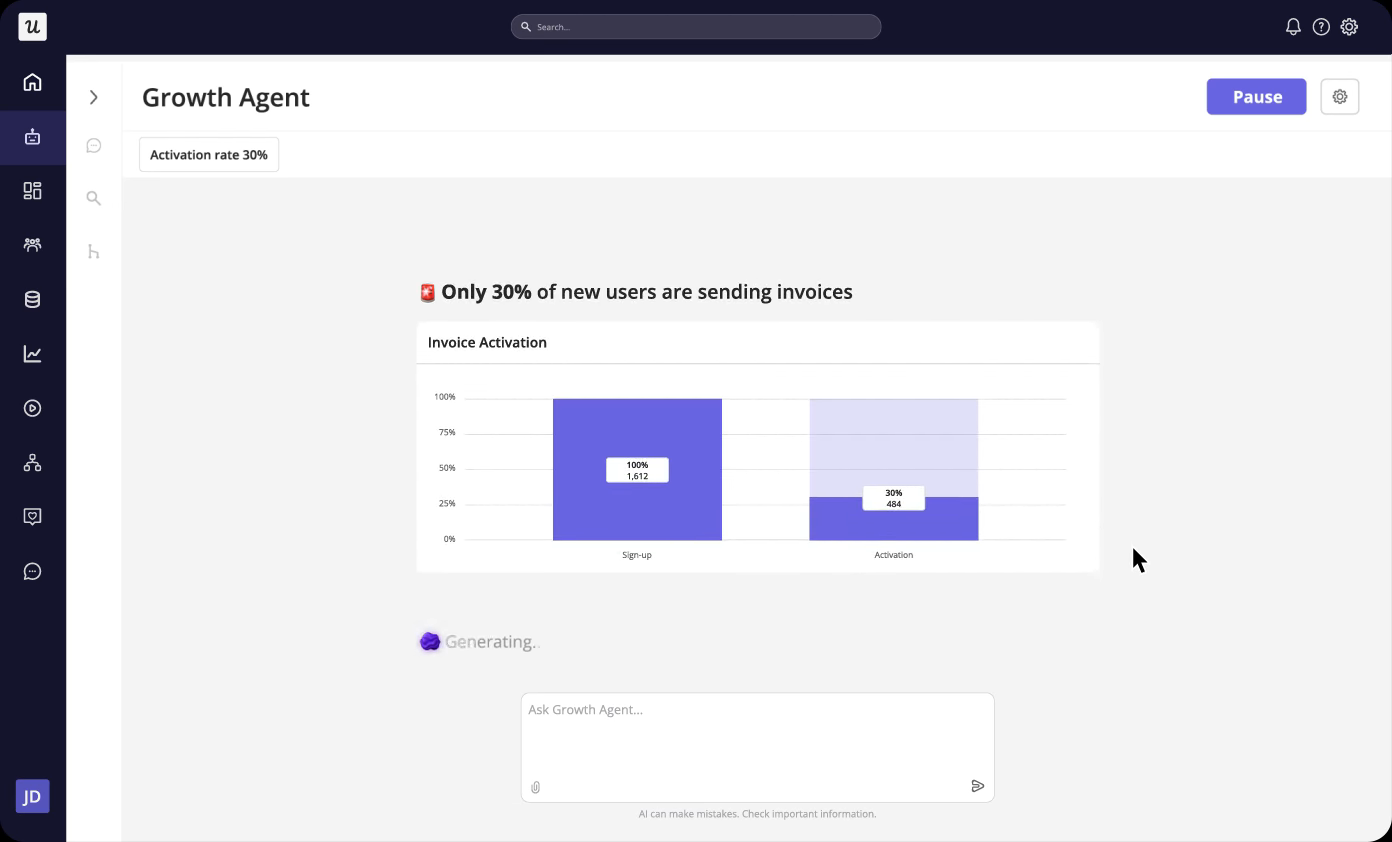
Userpilot is an all-in-one product growth platform that gives SaaS GTM teams the data they need to optimize onboarding, increase user engagement, and improve activations. With Userpilot, teams can improve their go-to-market strategies by identifying friction in the user journey and turning real-time behavior insights into in-app experiences that drive adoption.
Userpilot features:
Analyze real-world user behavior across the product journey to see where users drop off and find out why.
Streamline new user onboarding with product tours, checklists, banners, and more — all built into the product experience.
Collect feedback directly from users with no-code in-app surveys to surface qualitative insights about your products.
Userpilot pros:
Reviewers largely agree that Userpilot is easy to use and intuitive, accelerating ROI out of the gate.
Userpilot AI, an AI-powered companion growth agent that can create flows, surface insights, and automatically analyze data, is coming soon, helping teams future-proof their tech stacks.
Integrations with tools like HubSpot, Salesforce, Zendesk, Mixpanel, Amplitude, Google Analytics, and more.
Userpilot cons:
Pricing data not publicly available for Growth and Enterprise plans; unless you’re a small team, you’ll have to engage sales to understand potential costs.
While tons of reviewers say that Userpilot is easy to use, plenty others agree that there’s a steep learning curve for new users.
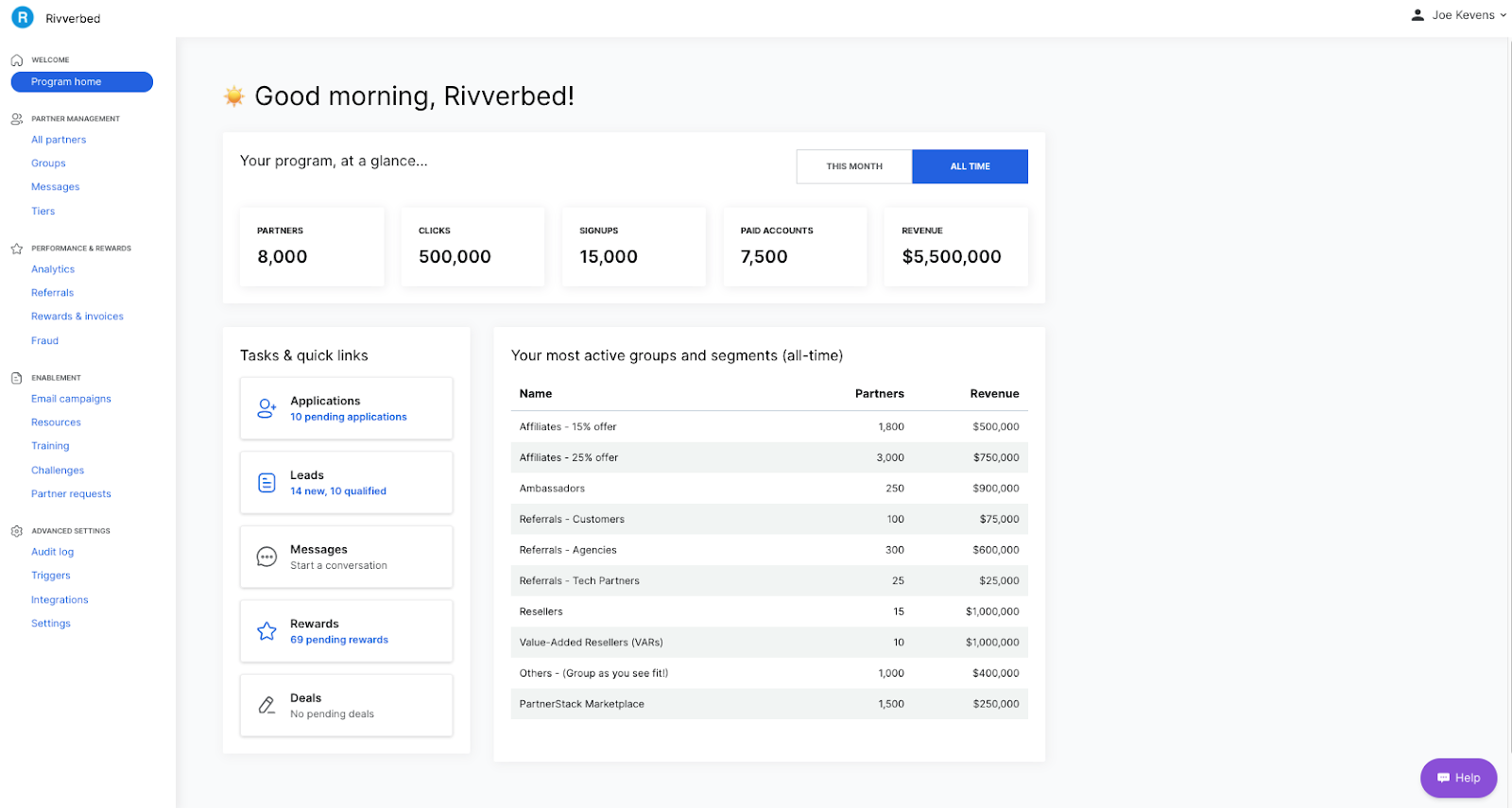
PartnerStack is a GTM partner management platform that helps teams drive partner revenue through co-selling, affiliate, influencer, and customer referrals. The platform also boasts a network of qualified partners, making it easier for B2B teams to grow their own partner networks, too.
PartnerStack features:
Accelerate partner activations with custom onboarding journeys that ensure new partners have the resources and training they need to close deals on your behalf.
Measure partner performance granularly to ensure each partner gets rewarded for the deals they play a role in.
Close deals faster by automatically routing qualified leads to the best-fit partners.
PartnerStack pros:
Users largely agree PartnerStack has an intuitive UI, making it easy to manage partner programs in one place.
Automation helps reclaim time previously spent manually tracking partner performance.
In addition to making it easier to manage existing partners, you can also grow your partner network with PartnerStack’s community of over 131,000 partners.
PartnerStack cons:
No pricing information is publicly available, so you’ll have to reach out to sales to see if you can afford it.
Some users report issues relating to payment accuracy and speed of payouts.
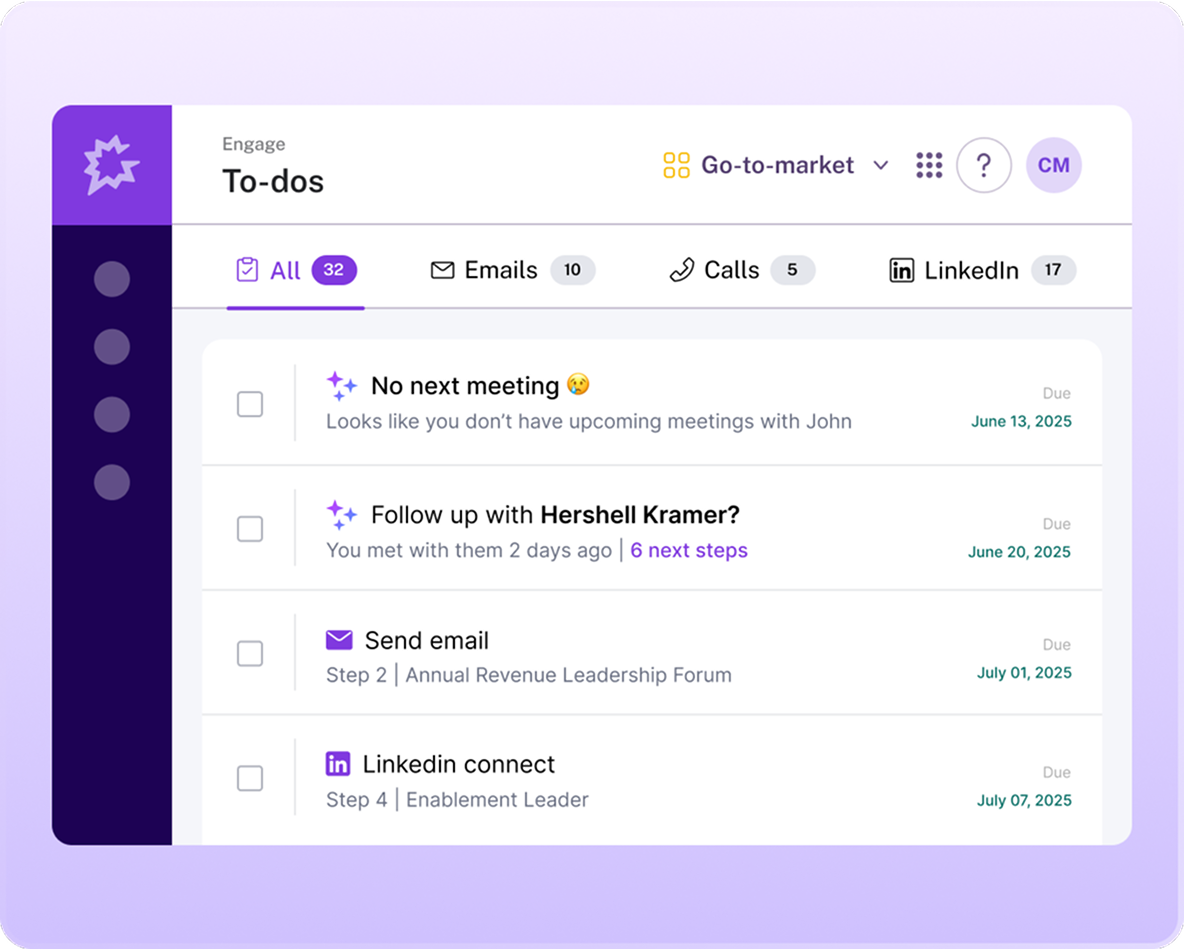
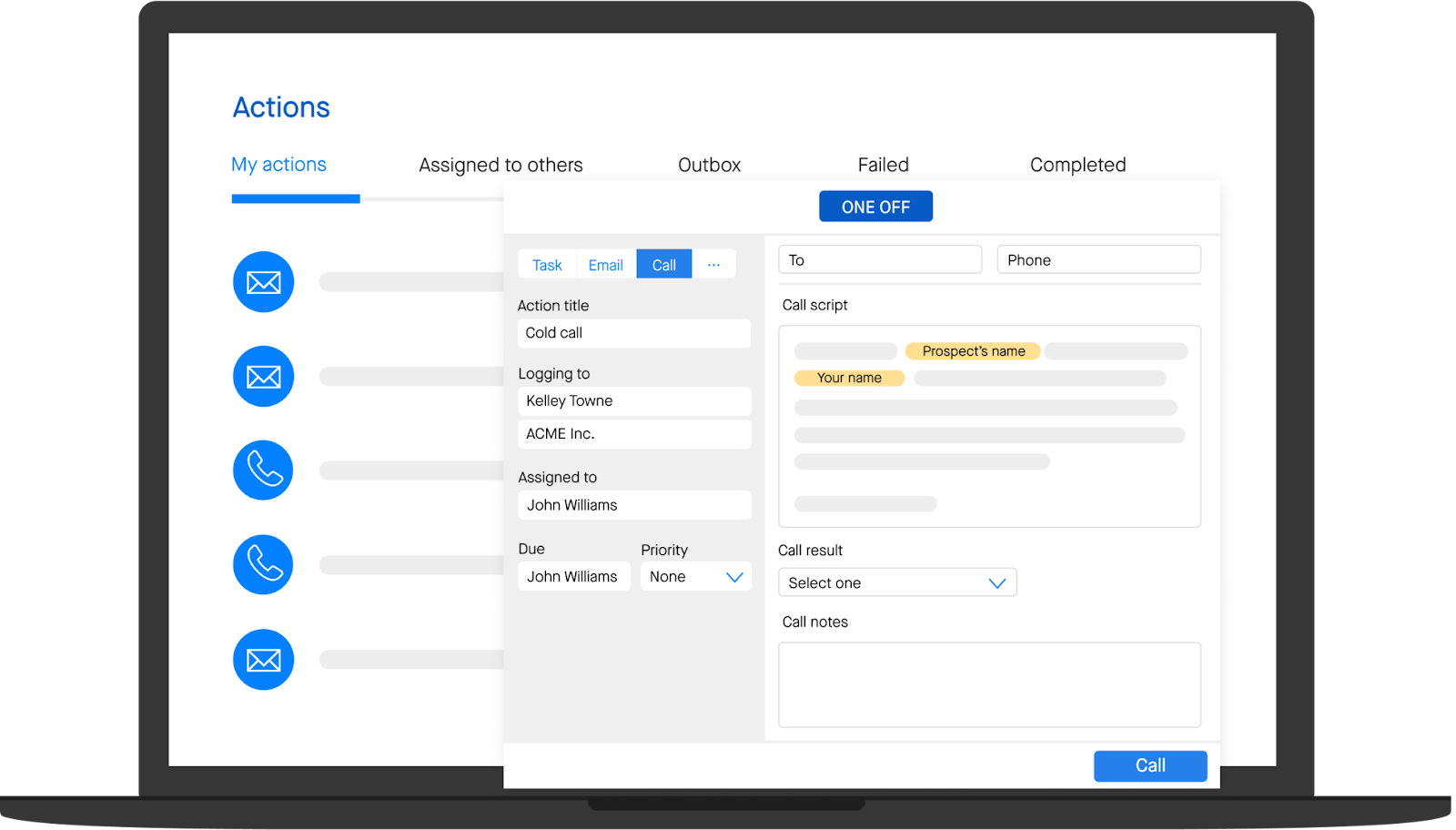
Groove by Clari is a sales engagement tool that consolidates email, calendar, and CRM data to streamline workflows and give GTM teams more time to focus on building relationships and selling. Using AI and automation, Groove centralizes all sales activities, enables repeatable outreach with customizable playbooks, and makes personalized outreach fast and painless.
Groove features:
Start each day with purpose and clarity, with a bird’s-eye view of meetings, tasks, and key buyer signals, all in one place.
Automate outbound sequences to ensure your outreach is consistent and your pipeline is always flowing.
Integrations with tools like Salesforce, LeadIQ, Gmail, Outlook, and LinkedIn enhance data integrity and improve the selling experience, with less toggling between apps.
Groove pros:
Reduce context switching and manual tasks by integrating all sales data and tools together in one place.
Use AI and automation to personalize outreach, maintain data quality, and automate recurring workflows to spend more time selling.
Save time by automating campaigns and using pre-built playbooks to ensure consistent buyer experiences and more predictable revenue.
Groove cons:
Clari is an all-in-one, feature-rich platform, and you have to buy the whole platform; if you’re just looking for sales engagement tools, you may want to look elsewhere.
No public pricing data is available; you’ll have to engage the sales team to see if the platform fits your budget.
Grow by Epicor is a no-code business intelligence platform that gives GTM teams a single source of truth and the insights they need to strengthen sales enablement and engage prospects more effectively. Using Grow, reps can answer their own questions and surface insights with simple self-serve tools.
Grow features:
Clean and prep data using inline ETL transforms and point-and-click tools, with no knowledge of SQL required.
Automate reporting and control data refresh rates to ensure dashboards stay up to date and actionable.
Create vibrant visualizations in just a few clicks to get a deeper understanding of your data faster.
Grow pros:
Users largely agree the platform is easy to use thanks to its intuitive design and user-friendly UI.
Improves collaboration with easily shareable dashboards based on the same data; send them to teammates via email, Slack, links, and more.
Connects with over 100 different sources, including HubSpot, Quickbooks, Shopify, Salesforce, and LinkedIn.
Grow cons:
Pricing information is not publicly available; you’ll have to engage the Epicor team to see if you can afford Grow.
Some users report that the platform has performance issues and can be slow to load.
Level up your GTM tools, team & strategy in 2026!
As market competition heats up and customer expectations continue to evolve, GTM teams will play an increasingly critical role in driving business success.
But just because it’s increasingly important to have an effective GTM strategy doesn’t mean you need to add more headcount to your team to pull it off.
In fact, we’d bet you probably have most of the GTM roles you’d need to fill already on payroll! 😎
In addition to having the right people, you also need the right tools. Many companies understand this, which is why they’re investing heavily in GTM software.
Case in point? The global GTM software market brought in $2.5 billion in 2023. By 2032, it’s expected to reach $7.8 billion, increasing 13.5% each year in between.
One major reason for this growth is the fact that GTM teams need to operate as efficiently as possible — and the right GTM tech stack supports that objective.
In a recent conversation with SaaStr founder Jason Lemkin, Owner.com CRO Kyle Norton shared insights into how his organization is automating workflows to help reps reclaim time — and how they have no plans to reverse course any time soon, with the north star of having reps able to “generate revenue every single minute of the day.”
By identifying what’s preventing reps from being on sales calls or following up on time and then adding in appropriate automations, “we’re probably up 25 to 30% in terms of the revenue-generating activity (RGA) time, because [reps] don’t have to fill out CRM after, they don’t have to update the notes for the launch team, it’s all done for them,” he says. “I would like the RGA time to be 70, 80%.”
Equipping your GTM team with the right tools makes this possible. As it stands today, reps spend less than 30% of their weeks selling. By automating away the busywork using tools like those included in this piece, Norton hopes his team can make every day what he sees as being the ideal day for reps.
“For us, it’s four demos, three helds, two follow-ups, and then a healthy amount of white space where they’re calling open opportunities, they’re doing a little bit of pipeline generation … and then the call prep, call follow-ups, CRM handoff stuff is at a minimum,” he says.
Bottom line? A purpose-built GTM stack makes life so much easier for your team — which makes your revenue goals that much easier to achieve.
To learn more about how to strengthen your GTM strategy, here are some resources to check out:
Enjoyed this content? Subscribe to receive B2B sales insights, prospecting tips, and updates on upcoming webinars and workshops delivered to your inbox.





.png)

.png)
.png)